
Diploma in Biomedical Equipment Assistance (DBEA)
By NCTA Team Last Updated: October 06, 2026Overview:
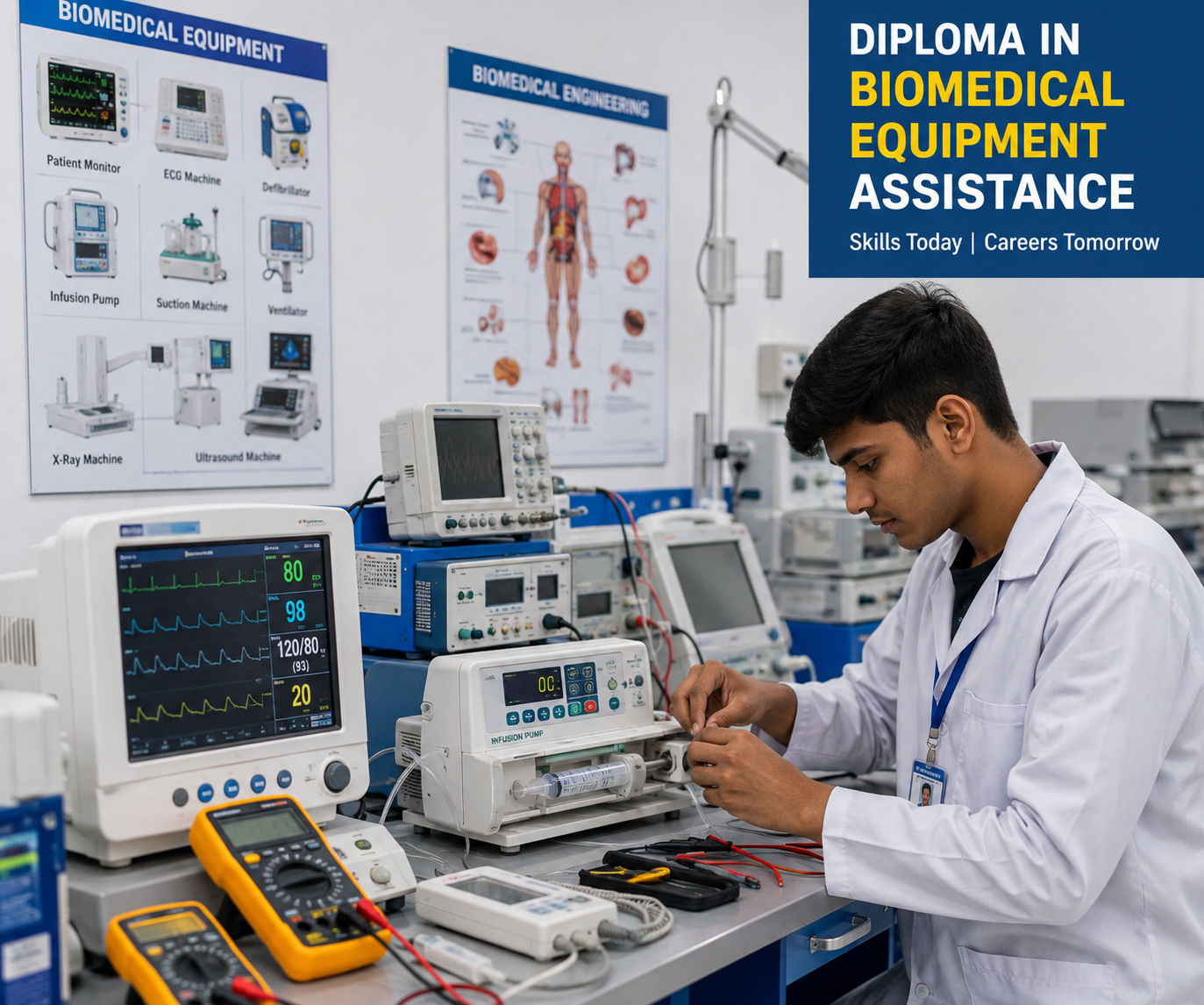
Diploma in Biomedical Equipment Assistance (DBEA) offered by the National Council of Training Academy (NCTA) is a diploma-level program designed to provide students with foundational theoretical knowledge and practical skills in biomedical equipment and healthcare technology. The course covers essential areas such as biomedical instrumentation, medical electronics, hospital equipment, equipment operation, preventive maintenance, basic troubleshooting, calibration, electrical safety, and healthcare equipment management.
The program integrates theoretical learning with practical training to help students understand the functioning and maintenance of commonly used medical and laboratory equipment. It is suitable for individuals interested in building a career in biomedical equipment support, hospital equipment maintenance, healthcare technology, and medical equipment service operations.
Course Objectives:
Diploma in Biomedical Equipment Assistance (DBEA) aims to equip students with essential knowledge and practical skills related to biomedical equipment, medical electronics, equipment operation, preventive maintenance, troubleshooting, safety procedures, and hospital equipment management.
The course is designed to help students understand the basic functioning of medical equipment and develop the practical competencies required to work under the supervision of qualified biomedical engineers, technicians, or healthcare professionals.
Course Curriculum:
This program is structured to provide a comprehensive understanding of biomedical engineering fundamentals, medical electronics, human anatomy, biomedical instrumentation, hospital equipment, equipment maintenance, and healthcare technology. The curriculum combines theoretical knowledge with practical training to provide students with hands-on exposure to biomedical and medical equipment.
Detailed Curriculum:
- Fundamentals of Biomedical Engineering
- Basic Human Anatomy & Physiology
- Basic Electrical & Electronics
- Medical Electronics
- Biomedical Instrumentation
- Hospital Medical Equipment
Students receive practical exposure to commonly used healthcare and medical equipment, including:
- ECG Machine
- Patient Monitor
- Pulse Oximeter
- Infusion Pump
- Syringe Pump
- Nebulizer
- Suction Machine
- Autoclave
- Centrifuge
- Microscope
- Laboratory Equipment
- Basic Biomedical Electronic Instruments
Practical training focuses on equipment identification, basic operation, preventive maintenance, safety procedures, testing, troubleshooting, and maintenance documentation.
Career Opportunities:
After successful completion of the program, graduates may explore entry-level/support opportunities in healthcare technology and medical equipment services, including:
- Biomedical Equipment Assistant: Assist with the operation, inspection, maintenance, and documentation of biomedical equipment under appropriate supervision.
- Medical Equipment Service Assistant: Support technical teams involved in installation, servicing, testing, and maintenance of medical equipment.
- Hospital Equipment Maintenance Assistant: Assist hospital maintenance teams with routine inspection and preventive maintenance of healthcare equipment.
- Biomedical Equipment Support Technician: Provide basic technical support for biomedical instruments and equipment under the supervision of qualified technical personnel.
- Medical Equipment Installation Assistant: Assist in the installation, setup, and initial testing of medical equipment.
- Healthcare Equipment Support Staff: Work with hospitals, clinics, diagnostic centres, and healthcare facilities in equipment-related support functions.
- Medical Equipment Sales & Service Support: Assist sales and service teams in product demonstrations, equipment documentation, customer support, and basic technical coordination.
- Laboratory Equipment Assistant: Support the handling, operation, and routine maintenance of laboratory equipment.
- Biomedical Equipment Inventory Assistant: Maintain records of equipment, service schedules, maintenance history, and inventory.
Salary Expectations:
Salary for DBEA graduates may vary depending on the job role, employer, location, practical skills, experience, and level of responsibility. Entry-level candidates may start in assistant or trainee positions, while candidates with relevant technical experience and additional industry certifications may progress to higher-level technical and supervisory roles.
Government and regulated technical positions may have specific educational, technical, registration, or recruitment requirements, so eligibility should always be checked against the relevant recruitment notification.
Course Features
| Course Code | NCTA-922 |
| Duration | 1 Year/600 hours |
| Category | Diploma in Biomedical Equipment Assistance (DBEA) |
| Eligibility | 10TH PASS/2-10 Year Experience in Relevant Field |
| Fees | 18000/USD-290 |
To know more about our this course, feel free to call us at:
+91 9733600770Ready to Enroll in This Course?
Start your learning journey today and unlock your potential!
Apply Now for This Course